

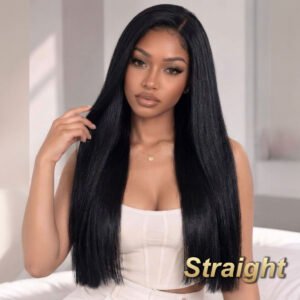

Yes, you can dye or bleach some human hair wigs, but the results depend on the hair’s original color, quality, previous chemical processing, and overall condition. Dyeing a wig a darker shade is generally less damaging than using bleach to lift dark hair to a lighter color. However, even 100% human hair can become dry, brittle, tangled, or unevenly colored after chemical treatment. The lace base and pre-bleached knots also require special care because additional chemicals may weaken the hair near the knots or damage the lace. Before buying, consider whether you want to keep your wig’s natural color or customize it later. If you prefer a ready-to-wear style with minimal maintenance, a natural black glueless wig from Velarisse Hair may be a practical choice without the need for additional coloring.
Can You Dye a Human Hair Wig?
Yes. A human hair wig can often be colored with products formulated for human hair, but not every wig is a good candidate for chemical treatment. The hair’s condition, original shade, and previous processing all influence how well it accepts color.
Before choosing a wig, understand the difference between depositing color and lifting color. These processes have different effects on human hair.
Dyeing a Human Hair Wig a Darker Color
Applying a darker shade is generally the more manageable option because it does not require removing as much natural pigment. For example, a suitable light brown human hair wig may be darkened to a deeper brown by an experienced colorist.
Even so, the result depends on the hair’s existing color and condition. Previously colored hair may absorb dye unevenly, and some products may leave the hair feeling dry or coated.
If you want a darker brunette shade, richer brown tone, or a color refresh, ask a professional stylist whether your specific wig can achieve the desired result without unnecessary damage.
Bleaching a Human Hair Wig to a Lighter Color
Bleaching is more complicated because it removes pigment from the hair. Transforming natural black hair into medium brown, blonde, or a very light shade may require substantial lifting and sometimes multiple chemical treatments.
The greater the lift, the greater the risk of damage. Overprocessed hair may become rough, lose elasticity, tangle more easily, or develop weak ends. Color can also turn out warmer, more orange, or less even than expected.
A wig that looks smooth and healthy before bleaching may not retain the same softness and fullness afterward. This is particularly important if you value full ends and a smooth, polished finish.
Buying tip: If your main goal is a blonde or light-colored wig, purchasing a wig already manufactured in a suitable lighter shade is usually a more sensible starting point than attempting to bleach dark hair extensively.
Dyeing vs. Bleaching a Human Hair Wig: What’s the Difference?
Dyeing and bleaching are not interchangeable. The right option depends on the color you want, your budget, and how much maintenance you are willing to accept.
| Feature | Dyeing a Wig Darker | Bleaching a Wig Lighter |
|---|---|---|
| Main purpose | Deposits or changes color toward a darker shade | Removes pigment to create a lighter base |
| Typical difficulty | Low to moderate, depending on the wig | Moderate to high |
| Risk of damage | Varies with the formula and hair condition | Generally higher, especially with significant lifting |
| Color predictability | Depends on the starting shade and previous treatment | Depends on the starting shade, lifting level, and existing damage |
| Effect on softness | May cause dryness or buildup | Can cause substantial dryness and loss of elasticity |
| Best suited for | Buyers seeking a darker shade or a modest color adjustment | Buyers seeking a lighter color and willing to accept additional risk |
| Professional help | Recommended for a significant color change | Strongly recommended |
Neither process is completely risk-free. Even a darker dye can affect the hair’s texture, and bleaching may compromise the smoothness, strength, and longevity of a wig.
Can You Bleach the Knots on a Human Hair Wig?
You can bleach knots on some human hair lace wigs, but you should check whether the knots have already been treated.
Knots are the small points where hair strands are secured to the lace. Lightening them can reduce their visibility and help create a more natural-looking hairline. However, excessive bleaching can weaken the hair at these attachment points and increase the likelihood of shedding.
This matters when shopping for a ready-to-wear wig. A wig with pre-bleached knots has already undergone knot-lightening treatment, so additional bleaching may be unnecessary.
For example, Velarisse Hair wigs feature pre-bleached knots and pre-plucked hairlines designed to reduce the amount of preparation needed before wearing. Buyers who want a natural-looking hairline without extensive customization should consider these features before deciding whether further chemical treatment is necessary.
If the knots still look too dark, consult a wig professional before applying more bleach. Also, avoid assuming that bleaching the knots and bleaching the entire wig are the same procedure. They serve different purposes and require different levels of control.
Can You Dye a Glueless Human Hair Wig Without Damaging the Lace?
It is possible to color certain glueless human hair wigs, but the lace requires particular care. Hair dye and bleach can stain, discolor, or weaken delicate lace materials, especially when chemicals are applied too close to the base or left on too long.
The risk may be greater when treating hair while it is still attached to the lace. Color can seep through the knots, stain the lace, or affect the hair’s attachment points.
For safer customization, keep these precautions in mind:
- Have a professional assess the wig before applying any chemical treatment.
- Perform a strand test on a discreet section to evaluate the color result and hair condition.
- Protect the lace and cap from unnecessary chemical exposure.
- Avoid soaking the entire wig in dye or bleach unless a qualified professional confirms that the specific construction can tolerate the process.
- Rinse and condition the hair according to the color product’s instructions.
- Allow the wig to dry properly before evaluating the final result.
Do not assume that a wig labeled 100% human hair is automatically safe for every coloring technique. Hair quality, manufacturing treatments, and previous chemical exposure all matter.
What to Look for When Buying a Human Hair Wig You Plan to Color
If you already know that you want a custom color, shopping for the right starting point is more important than trying to correct a poor match later.
Check the Original Hair Color
Your starting color determines how much chemical work may be required.
Natural black hair is a suitable option for buyers who prefer a dark, classic look. It may also be possible to make certain professional color adjustments, but lifting it to blonde or another substantially lighter shade can be challenging.
If you want a lighter shade with minimal processing, look for a wig offered in a suitable starting color rather than assuming every dark human hair wig can be safely transformed.
Understand Previous Chemical Processing
Ask whether the hair has been dyed, bleached, toned, or otherwise chemically treated. Previous processing can influence how consistently the hair accepts new color and how much additional treatment it can tolerate.
If the product description does not provide enough information, contact the seller before buying. Do not rely on general claims about human hair alone to determine whether a specific wig is suitable for bleaching.
Consider Hair Fullness and End Quality
Color is only one part of the buying decision. The hair’s fullness, smoothness, and condition also affect the final appearance.
If you prefer hair that looks full from the roots to the tips, look for clear information about hair construction and density, along with realistic product photos showing the ends.
Chemical processing can compromise that appearance. Bleaching, repeated coloring, and excessive heat may leave the ends looking thinner or rougher than they did originally.
Look for Pre-Processed Lace Features
Pre-cut lace, a pre-plucked hairline, and pre-bleached knots can reduce the amount of preparation needed before wearing a wig.
These features are especially useful for buyers who want a natural-looking finish without having to perform every customization step themselves.
However, pre-processed lace does not mean the wig is guaranteed to withstand additional bleaching. Existing treatments should be taken into account before any further chemical work.
Decide Whether You Actually Need a Color Change
Before purchasing a wig for customization, ask yourself whether a different color is essential or whether a natural black style would meet your everyday styling needs.
A wig that already matches your desired look may save you the cost of professional coloring and reduce the risk of damage. It can also make maintenance more straightforward.
Which Human Hair Wig Should You Buy? Comparing Your Options
The best choice depends on whether you value color customization, low-maintenance wear, or flexibility in styling.
| Buying Option | Main Advantages | Potential Drawbacks | Best For |
|---|---|---|---|
| Natural black human hair wig | Classic appearance; no need to lighten the hair; straightforward styling | Limited to a dark look unless professionally customized | Buyers who prefer natural black hair |
| Human hair wig in a lighter starting shade | May require less lifting to achieve certain lighter colors | Availability and color choices vary; previous processing still matters | Buyers planning a brunette, caramel, or blonde look |
| Dark human hair wig intended for major bleaching | Provides a starting point for substantial color transformation | Higher damage risk, potential loss of softness, and unpredictable results | Experienced colorists and buyers willing to accept the risks |
| Pre-processed glueless lace wig | Reduces installation preparation; offers a ready-to-wear starting point | Additional bleaching may still damage the hair or lace | Beginners and buyers who prefer convenience |
For most shoppers, the practical decision is to buy a wig that already matches their preferred appearance. If customized color is a priority, choose a product with a suitable starting shade and confirm its chemical-processing history before placing an order.
Should You Color a Human Hair Wig at Home or Visit a Professional?
Home coloring may seem less expensive, but human hair wigs are different from growing hair attached to a scalp. A wig does not receive natural oils from the scalp, and its lace construction introduces additional concerns.
Chemical treatments can also make a wig harder to maintain. If the hair becomes dry, tangled, or weak, restoring its original condition may not be possible.
When Home Coloring May Be Reasonable
Home coloring may be suitable for someone with experience who is making a modest adjustment to a wig that a manufacturer or qualified stylist has confirmed is appropriate for the intended process.
Even then, follow the product instructions carefully, perform a strand test, and avoid unnecessary chemical exposure.
When Professional Coloring Is the Better Choice
Professional help is strongly recommended when you want to:
- Lift natural black hair several levels lighter.
- Achieve blonde, ash, or other precise color results.
- Correct uneven color or previously processed hair.
- Bleach knots on a lace wig.
- Preserve a smooth finish and full-looking ends while making a significant change.
A wig specialist can assess the hair’s condition and determine whether the requested result is realistic. In some cases, the stylist may recommend choosing a different wig rather than proceeding with a damaging treatment.
How to Care for a Human Hair Wig After Coloring
Color-treated human hair needs thoughtful maintenance. The goal is to minimize dryness, friction, and unnecessary stress on the hair.
Use color-safe products. Choose a gentle shampoo and conditioner appropriate for color-treated hair. Avoid harsh cleansing products unless your stylist recommends them for a specific purpose.
Condition regularly. Chemically processed hair may require more conditioning than unprocessed hair. Apply conditioner mainly to the lengths and ends, following the product directions.
Limit heat styling. Frequent high-temperature styling can make colored hair feel drier and increase breakage. Use a heat protectant and the lowest effective temperature.
Detangle gently. Work from the ends upward using a suitable wig brush or wide-tooth comb. Avoid pulling through tangles, especially near the lace and attachment points.
Reduce friction. Store the wig properly and avoid leaving it tangled in a pile. Gently secure the hair when storing or transporting it.
Watch for signs of damage. Persistent tangling, rough ends, unusual shedding, and reduced elasticity may indicate that the hair has been overprocessed. Further bleaching or coloring may worsen these issues.
With appropriate care, a human hair wig can remain wearable after some types of color treatment. However, no maintenance routine can guarantee that chemically processed hair will return to its original condition.
Recommended Velarisse Hair Wigs: A Natural Black Look Without Unnecessary Bleaching
If you prefer a polished, natural-looking hairstyle without committing to a major color transformation, Velarisse Hair offers a practical starting point with its glueless 13×4 and 5×5 HD lace human hair wigs.
The current collection focuses on natural black (1B) hair, with lengths ranging from 18 to 24 inches. These styles are designed for buyers who want a ready-to-wear look and prefer not to start with the extensive customization often associated with traditional lace wigs.
Velarisse Hair 13×4 HD Lace Front Wig
Best for: Buyers who prioritize parting flexibility and versatile styling.
A 13×4 lace front offers a wider lace area across the front of the head and more room for changing the part within the available lace coverage.
Velarisse Hair’s 13×4 glueless wigs feature pre-cut HD lace, pre-plucked hairlines, and pre-bleached knots to simplify preparation. They are worth considering if you want a natural-looking hairline and styling flexibility without needing to begin with a major bleaching project.
Choose this option if you expect to change your part regularly or want more room for front-of-head styling.
Velarisse Hair 5×5 HD Lace Wig
Best for: Buyers who prefer a practical everyday wig with a smaller lace area.
A 5×5 lace closure offers a smaller lace section than a 13×4 frontal while still providing room to part the hair within the closure area.
For shoppers who prefer a more straightforward styling routine, this can be a useful alternative. Its pre-processed lace features also reduce the amount of initial preparation needed.
Choose a 5×5 wig if you want a polished, everyday look and do not need the broader front lace coverage of a 13×4 style.
Which Velarisse Hair Wig Is Better If You Want to Dye It?
Both options are worth considering if you prefer a natural black human hair wig and want the flexibility to consult a professional about future color adjustments. The 13×4 is the stronger choice for buyers who want more front-lace styling flexibility, while the 5×5 suits those who prefer a smaller lace area.
However, Velarisse Hair’s current collection is offered in natural black (1B), so neither option should be treated as a guaranteed base for blonde or other substantial lightening transformations. Confirm the wig’s suitability with the brand and a qualified colorist before applying dye or bleach.
If light-colored hair is your main goal, compare the cost and risks of professional bleaching with purchasing a wig already available in an appropriate lighter shade.
Frequently Asked Questions
Can you dye a 100% human hair wig?
Yes, many 100% human hair wigs can be dyed, but the results depend on the hair’s starting color, condition, and previous processing. Confirm that the specific wig is suitable for your intended color treatment before proceeding.
Can you bleach a black human hair wig blonde?
It may be possible, but lifting black hair to blonde can require extensive chemical processing and may cause significant damage. A professional colorist should evaluate the wig before treatment. Buying a wig in a suitable lighter shade may be a better option.
Will dyeing a wig make it shed?
Coloring does not automatically cause shedding, but chemical damage can weaken the hair and its attachment points. Bleaching knots or repeatedly processing the hair may increase the risk of shedding, especially if the wig is already damaged.
Can you bleach pre-bleached knots again?
Sometimes, but additional bleaching may weaken the knots and increase the likelihood of hair loss. Have a wig professional assess the lace and knots before applying more bleach.
Does dyeing a wig shorten its lifespan?
It can. Chemical processing may reduce softness, strength, and resistance to tangling, potentially shortening the wig’s useful life. The extent depends on the treatment, the hair’s original condition, and subsequent care.
Is a natural black human hair wig a good choice for beginners?
Yes, if natural black is the color you want. A ready-to-wear glueless wig with pre-cut lace, a pre-plucked hairline, and pre-bleached knots can reduce the need for initial customization. Beginners should still learn proper fitting, removal, washing, and storage techniques.
Should I buy a wig before deciding what color to make it?
Ideally, decide on your target color first. Knowing whether you want natural black, brown, caramel, or blonde will help you select a suitable starting shade and avoid unnecessary chemical processing.
Final Thoughts
You can dye or bleach some human hair wigs, but the safest buying decision starts with understanding the color you want and the condition of the hair you purchase. Dyeing a wig darker is generally more manageable than lifting dark hair to blonde, while bleaching requires particular care around the lace and knots.
Before buying, check the original hair color, processing history, lace construction, and suitability for your intended treatment. If you want a natural black, ready-to-wear style, explore Velarisse Hair’s 13×4 and 5×5 glueless HD lace wigs. Their pre-cut lace, pre-plucked hairlines, and pre-bleached knots are designed to simplify your styling routine without making extensive color customization a requirement.
Choose the wig that fits your desired look from the beginning, and consult a professional before making a chemical change that could compromise the hair’s softness, fullness, or longevity.