

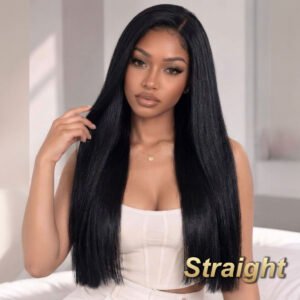
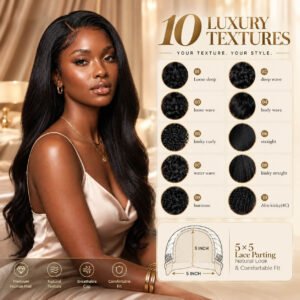
Yes, human hair wigs can shed and tangle, even when they are made with high-quality hair. However, noticeable shedding and frequent tangling are not inevitable. The amount you experience depends on the wig’s construction, hair quality, length, texture, daily handling, and maintenance routine. Shedding usually happens when individual strands loosen from the wig’s lace or cap, while tangling occurs when strands catch on one another, often because of friction, dryness, or matting. The good news is that choosing a well-made human hair wig and caring for it properly can help reduce both problems. When shopping, pay attention to hair quality, construction, fullness through the ends, and the amount of styling and upkeep you are comfortable with. Velarisse Hair offers glueless 13×4 and 5×5 HD lace human hair wigs designed for a polished, natural-looking finish.
Do Human Hair Wigs Shed?
Human hair wigs can shed because they are made from individual strands secured to a lace base, wefts, or another type of cap construction. Unlike hair growing from your scalp, wig hair does not continuously regenerate when a strand falls out.
A small amount of shedding may occur during normal wear and grooming. However, excessive shedding, visible thinning, or large amounts of hair coming loose during gentle brushing may indicate a construction issue or overly rough handling.
Several factors can contribute to human hair wig shedding.
Wig construction: Hair must be securely attached to the wig cap. Weak attachment points or poor workmanship can allow strands to loosen more easily.
Rough handling: Pulling a brush through knots, tugging at the roots, or repeatedly pulling on the lace can loosen individual hairs.
Frequent heat styling: High temperatures can weaken and dry the hair, making it more vulnerable to breakage. Although breakage is different from shedding at the attachment point, both can leave hair looking thinner.
Improper washing: Scrubbing the hair aggressively, twisting it while wet, or rubbing it with a towel can create unnecessary tension.
Product buildup: Heavy styling products can make hair feel stiff or coated, encouraging tangling and making detangling more difficult.
To help reduce shedding, start detangling from the ends and work toward the roots. Use a wide-tooth comb or a suitable wig brush, support the hair while brushing, and avoid pulling directly on the lace or hairline. When washing, handle the hair gently and follow the manufacturer’s care instructions.
Do Human Hair Wigs Tangle?
Yes, human hair wigs can tangle, particularly at the nape of the neck, around the ends, and in areas exposed to frequent friction.
Because wig hair is not attached to an active scalp, it does not receive the natural oils that normally help condition hair growing from your head. Human hair wigs therefore need regular conditioning and careful handling to maintain softness and manageability.
The most common causes of tangling include:
- Friction from clothing: Collars, scarves, coats, and hoodies can rub against the hair, especially at the nape.
- Dry or damaged strands: Hair that lacks moisture or has a roughened cuticle can catch on neighboring strands.
- Longer lengths: Longer wigs have more hair that can overlap, rub together, and become intertwined.
- Frequent heat styling: Repeated straightening or curling without appropriate heat protection can contribute to dryness and roughness.
- Skipping detangling: Small knots can combine into larger tangles when left unattended.
- Sleeping with loose hair: Movement during sleep can create friction and matting, especially when the hair is left loose against bedding.
Tangling does not automatically mean a human hair wig is poor quality. Even premium hair needs maintenance. However, persistent tangling, severe matting, and roughness soon after purchase deserve closer attention, particularly if they continue despite gentle care.
Shedding vs. Tangling: What’s the Difference?
Although shedding and tangling can happen together, they are two different problems. Understanding the difference can help you identify the cause and choose the right solution.
| Problem | What It Looks Like | Common Causes | What Helps |
|---|---|---|---|
| Shedding | Individual strands come loose from the wig | Construction issues, pulling, rough brushing | Gentle handling and secure construction |
| Breakage | Short pieces of hair appear during brushing | Excessive heat, dryness, mechanical damage | Conditioning, lower heat, less friction |
| Tangling | Strands catch together and form knots | Friction, dryness, longer lengths, inconsistent detangling | Regular detangling and conditioning |
| Matting | Dense knots form that are difficult to separate | Prolonged friction, neglected tangles, product buildup | Preventive care and gentle detangling |
One practical distinction is where the loose hair comes from. If the strands appear to have come free from the lace or cap, shedding may be the issue. If you see shorter broken pieces, the hair may be experiencing breakage. If the strands are still attached but difficult to separate, tangling is more likely.
Do not automatically pull harder when a knot resists your comb. Apply a suitable detangling product, hold the hair above the knot to reduce tension, and work slowly from the ends upward.
Which Human Hair Wig Should You Buy to Reduce Shedding and Tangling?
Not every wig construction offers the same styling experience. The best option depends on your priorities, including hair fullness, lace coverage, styling flexibility, length, and how much maintenance you are willing to do.
Double Drawn vs. Single Drawn Human Hair Wigs
Hair selection affects the overall appearance of a wig, particularly its fullness through the ends. However, the terms double drawn and single drawn describe hair distribution and fullness, not a guarantee against shedding or tangling.
| Feature | Double Drawn Human Hair | Single Drawn Human Hair |
|---|---|---|
| Fullness through the ends | Generally fuller and more uniform | Generally more tapered toward the ends |
| Overall appearance | A denser, more substantial finish | A more naturally tapered finish |
| Hair distribution | More shorter strands are removed to create consistent length and fullness | A wider range of strand lengths is retained |
| Potential advantage | Ideal for buyers who want fuller-looking lengths | Suitable for buyers who prefer less uniform ends |
| Important consideration | Fuller ends do not automatically mean less tangling | Tapered ends do not automatically mean more shedding |
Who should choose double drawn hair?
Choose double drawn human hair if you prefer a full, polished look from the roots through the ends. It is especially appealing when you want straight styles with a substantial finish rather than ends that look progressively thinner.
Who should choose single drawn hair?
Single drawn hair may suit buyers who prefer a more tapered silhouette and do not need the same degree of fullness through the ends.
Neither construction is inherently immune to shedding or tangling. Hair quality, secure attachment, processing, and daily care remain important.
13×4 vs. 5×5 HD Lace Human Hair Wigs
Lace size primarily affects your styling options and the amount of lace you need to manage. It is not, by itself, a direct measure of shedding resistance or hair quality.
| Feature | 13×4 HD Lace Wig | 5×5 HD Lace Wig |
|---|---|---|
| Lace coverage | Wider lace area across the front hairline | Smaller lace area concentrated around the parting area |
| Styling flexibility | Offers more room for changing part placement and creating different front styles | Works well for straightforward parting styles |
| Best for | Buyers who want more flexibility around the front | Buyers who prefer a more contained lace area |
| Main convenience | More versatility for front styling | A simpler lace area to manage |
| Maintenance consideration | Requires care across a wider lace section | Requires care around the smaller lace section and hairline |
Choose a 13×4 wig if you value greater flexibility around the front hairline and want more freedom to change your part or style the front sections.
Choose a 5×5 wig if you want a defined parting area and a more compact lace design. It can be an appealing option for buyers who prefer a simpler everyday styling routine.
Both options can look natural when the lace, hairline, and overall construction suit your needs. Neither guarantees less shedding or tangling simply because of its lace dimensions.
Straight Hair vs. Wavy Hair
Hair texture can also influence how much maintenance a wig needs.
| Hair Texture | Potential Advantages | Maintenance Considerations |
|---|---|---|
| Straight | Easy to smooth and detangle when properly conditioned | Friction can still create knots, especially near the nape and ends |
| Wavy | Adds movement and dimension without requiring a completely straight finish | Waves can become less defined and may require careful refreshing |
| Curly | Creates volume and textured styling options | Requires careful separation and maintenance to help prevent knots and matting |
Buyers who want a straightforward routine may prefer a texture that matches their usual styling habits. Straight hair is not automatically tangle-free, and textured hair is not necessarily poor quality. The key is choosing a texture you can maintain consistently.
How to Choose a Human Hair Wig That Is Less Likely to Shed or Tangle
Before buying, look beyond marketing phrases such as premium, luxury, or 100% human hair. Those descriptions alone cannot establish how well a particular wig will perform over time.
Use the following criteria to compare your options.
Check the Construction and Hair Attachment
A well-made wig should have securely attached hair and a cap structure appropriate for its intended use. Look for clear product information and close-up images of the lace, hairline, and construction.
No wig can be guaranteed to experience zero shedding. However, the quality of the construction can influence how well the hair remains attached during normal wear and care.
Look at the Ends, Not Just the Roots
A wig may look full near the crown while appearing noticeably thin toward the ends. Examine the full length of the hair in product photos and videos.
If you prefer a substantial, uniform finish, double drawn hair is worth considering. A fuller appearance through the ends can also help create a more polished look when wearing longer straight styles.
Remember that visual fullness is different from durability. A wig with full ends can still tangle or shed if it is handled roughly or poorly constructed.
Consider Your Preferred Length
Longer human hair wigs can create an elegant, flowing appearance, but they generally have more surface area exposed to friction.
For example, a 24-inch wig may require more frequent detangling than an 18-inch wig, especially if you wear collars, scarves, or jackets that rub against the hair.
Choose length based on both your desired look and your daily routine. If you love long hair, regular maintenance is a more practical solution than assuming all long wigs will tangle excessively.
Look for Useful Lace Preparation
Features such as pre-cut HD lace, a pre-plucked hairline, and pre-bleached knots can reduce some of the preparation involved in achieving a natural-looking finish.
These features primarily affect the hairline’s appearance and the convenience of getting ready. They do not, on their own, prevent tangling or guarantee reduced shedding.
For a buyer who wants a ready-to-wear experience, pre-processed lace can still be valuable because it reduces the amount of customization needed before wearing the wig.
Match the Wig to Your Maintenance Routine
Be realistic about the time you want to spend on your hair.
If you prefer a simple everyday routine, consider a length and texture you can detangle comfortably, a construction that suits your styling habits, and hair that does not require excessive heat or complicated restyling.
Before ordering, also review the brand’s care instructions, return policy, product details, and customer feedback. These details help you understand what to expect beyond the product photographs.
How to Prevent Human Hair Wigs From Shedding and Tangling
Once your wig arrives, proper care can make a significant difference in its day-to-day condition. A consistent routine is generally more effective than trying to repair severe knots after they develop.
Detangle Gently and Regularly
Before and after wearing your wig, check for tangles, especially around the nape and ends. Start at the bottom and gradually work upward.
Use a wide-tooth comb or a brush suitable for wigs. Avoid brushing aggressively from the roots down, as this can pull on the hair attachments and make knots tighter.
When you encounter resistance, stop and separate the strands gently rather than forcing the brush through them.
Wash Without Rough Scrubbing
Wash the wig when it needs cleansing rather than following an unnecessarily frequent schedule. Use a suitable shampoo and conditioner, following the brand’s instructions.
Gently work products through the hair in the direction of the strands. Avoid vigorous rubbing, twisting, or bunching the hair together, because these actions can increase friction and create knots.
Rinse thoroughly so that heavy product residue does not accumulate.
Condition the Hair and Protect the Ends
The ends are particularly susceptible to friction and dryness. Use a suitable conditioner and, when appropriate, a lightweight leave-in product to help improve softness and manageability.
Avoid applying excessive amounts of heavy products, which can build up on the hair and make it feel coated.
Product selection should depend on the hair’s condition and the wig manufacturer’s recommendations.
Limit Excessive Heat
Human hair wigs can generally be styled with heat, but repeated high-temperature styling can damage the hair over time.
Use a heat protectant, choose a moderate temperature whenever possible, and avoid repeatedly applying heat to the same sections.
If you prefer a sleek finish, careful brushing and gentle styling may reduce the need for frequent straightening.
Reduce Friction During Wear and Sleep
Pay attention to what your hair touches throughout the day. Rough collars, scarves, and synthetic fabrics can cause repeated friction, especially where the hair rests against your neck.
Before sleeping, detangle the wig and follow appropriate storage or overnight-care instructions. If your wig is designed to be removed, taking it off and storing it properly can help reduce unnecessary friction.
Store the Wig Properly
When you are not wearing your wig, keep it on a suitable wig stand or store it according to the manufacturer’s recommendations.
Make sure the hair is clean enough for storage, fully dry, and free of major tangles. Avoid placing it where the strands can become compressed, twisted, or caught on other items.
Proper storage helps preserve the style and makes your next detangling session easier.
When Should You Be Concerned About Wig Shedding or Tangling?
Some maintenance is normal, but repeated problems should not be dismissed.
Consider contacting the seller if you notice any of the following:
- Large amounts of hair coming loose during gentle handling.
- Visible thinning or bald patches developing in a short period.
- Severe tangling that returns quickly after careful detangling.
- Hair that becomes unusually rough or matted despite appropriate care.
- Lace or construction issues that appear to be causing strands to loosen.
Before assuming the wig is defective, review how it has been washed, styled, stored, and handled. Excessive heat, tension, and friction can damage even good-quality human hair.
Take photos or videos of any noticeable issue and review the seller’s return, exchange, and warranty policies. Clear product expectations and responsive customer support are important parts of the buying experience.
Why Choose Velarisse Hair Human Hair Wigs?
For buyers who want a natural-looking finish, convenient styling, and fuller-looking hair, Velarisse Hair offers glueless 13×4 and 5×5 HD lace human hair wigs in lengths from 18 to 24 inches.
The collection is designed around features that help simplify the process of achieving a polished look without making professional installation a requirement.
Double Drawn Hair for Fuller-Looking Ends
Velarisse Hair’s double drawn hair is intended for buyers who prefer a fuller appearance throughout the length rather than a strongly tapered finish.
This construction is particularly appealing if you enjoy sleek, straight styles with substantial-looking ends. As with any human hair wig, good care remains important for managing friction, reducing tangles, and maintaining the hair’s appearance.
Pre-Cut HD Lace for a Simpler Start
The glueless wig collection features pre-cut HD lace, helping reduce the preparation needed before wearing the wig.
HD lace is designed to blend discreetly with the skin when properly positioned, although the final result depends on individual skin tone, lighting, fit, and application.
The pre-processed design is useful for buyers who would rather spend less time customizing their lace before styling.
Pre-Plucked Hairlines and Pre-Bleached Knots
A pre-plucked hairline and pre-bleached knots help create a softer-looking hairline without requiring as much customization at home.
These details support a more natural-looking finish, especially for buyers who are new to lace wigs or prefer a streamlined getting-ready routine. They are appearance-related features rather than guarantees against shedding.
Glueless Convenience for Everyday Wear
Velarisse Hair’s 13×4 and 5×5 options are designed for glueless wear, offering an alternative for buyers who prefer not to rely on adhesive for their everyday wig routine.
The 13×4 option is worth considering if you want a wider lace area and greater front-styling flexibility. The 5×5 option may be better suited to buyers who prefer a more compact lace section and a defined parting area.
Both options combine the convenience of pre-processed lace with the appearance of human hair.
Which Velarisse Hair Wig Is Right for You?
Choose a Velarisse Hair 13×4 HD lace wig if you want:
- More room for changing your part and styling the front.
- A versatile front hairline for different looks.
- Double drawn hair with fuller-looking ends.
- A glueless option with pre-processed lace.
Choose a Velarisse Hair 5×5 HD lace wig if you want:
- A more compact lace area.
- A defined parting area for everyday styling.
- A glueless design that reduces the preparation required before wearing.
- Double drawn hair for a fuller, more uniform appearance.
Both options are available in lengths from 18 to 24 inches, giving you room to choose a look that suits your proportions and styling preferences.
Explore the Velarisse Hair collection to compare available lengths and lace options.
Frequently Asked Questions
Do all human hair wigs shed?
Most human hair wigs may shed to some degree because their strands are attached to a cap or lace base rather than growing from a scalp. A small amount of shedding can occur during normal handling. Excessive shedding, rapid thinning, or visible bald patches may indicate a construction problem, damage, or rough handling.
Do expensive human hair wigs shed less?
Price alone does not guarantee less shedding. Construction quality, hair attachment, processing, and handling all influence how a wig performs. Compare product details, close-up images, customer feedback, and the seller’s policies rather than relying on price as the only quality indicator.
Why does my human hair wig tangle at the nape?
The nape experiences repeated friction from clothing, movement, and contact with your shoulders. Longer hair may be particularly susceptible. Regularly detangle the lower sections, condition the hair appropriately, and pay attention to rough collars or fabrics that rub against it.
Does double drawn hair prevent tangling?
No. Double drawn hair generally offers more consistent fullness through the ends, but it does not eliminate tangling. Hair quality, friction, dryness, styling habits, and maintenance all influence how easily strands become knotted.
Are glueless wigs less likely to shed?
Not necessarily. Glueless describes how the wig is secured, not how its individual strands are attached. Shedding depends more on construction, hair attachment, and handling than on whether adhesive is used.
Which is better for beginners: a 13×4 or a 5×5 wig?
A 5×5 wig may suit beginners who want a more compact lace area and a straightforward parting style. A 13×4 wig may be preferable for buyers who want more freedom to style the front. Your choice should depend on your preferred hairstyles and how much lace coverage you want to manage.
How often should I wash a human hair wig?
There is no single schedule that suits every wig. Washing frequency depends on how often you wear it, how much product you use, and whether the hair becomes oily, coated, or dirty. Follow the manufacturer’s care instructions and avoid excessive washing or aggressive scrubbing.
Can a human hair wig last for years without tangling?
No wig can be guaranteed to remain tangle-free for years. Longevity depends on initial quality, wear frequency, styling, environmental conditions, and maintenance. Gentle detangling, conditioning, reduced heat exposure, and proper storage can help keep the hair manageable for longer.
Final Thoughts
Human hair wigs can shed and tangle, but these issues do not automatically mean you have purchased a poor-quality product. The most useful approach is to understand the difference between shedding, breakage, and tangling, compare construction and fullness carefully, and establish a consistent care routine.
When choosing a wig, consider how much fullness you want through the ends, which lace coverage best suits your preferred styles, and how much maintenance fits your lifestyle. Double drawn hair can be an appealing choice for a fuller-looking finish, while pre-processed HD lace can make the initial wearing experience more convenient.
Velarisse Hair’s glueless 13×4 and 5×5 HD lace human hair wigs bring together double drawn hair, pre-cut lace, pre-plucked hairlines, and pre-bleached knots for buyers seeking a polished look with less preparation. Choose the lace style and length that suit your needs, and treat your wig with care to help maintain its appearance over time.