
If you’re deciding between a 180% and 250% density wig, the right choice comes down to how full you want your hair to look and how much volume you prefer. A 180% density wig offers a balanced combination of fullness, natural movement, and everyday versatility. It’s an excellent starting point if you want hair that looks thick without feeling overly voluminous. A 250% density wig delivers a dramatically fuller appearance, making it ideal for glamorous waves, voluminous curls, and statement hairstyles. However, more density isn’t automatically better. Hair length, texture, construction, and the quality of the hair all affect the final look. For an everyday wig that is relatively easy to style, 180% is often the practical choice. For maximum fullness from root to ends, 250% may be worth the extra styling effort.
What Is the Difference Between 180% and 250% Wig Density?
Wig density describes how much hair is used to create a wig’s overall fullness. Although density percentages are not perfectly standardized across every wig brand, they generally help shoppers compare how thick different wigs are intended to look.
A 180% density wig provides a full, voluminous appearance while preserving natural-looking movement. A 250% density wig contains substantially more hair, creating a thicker silhouette and a more dramatic finish.
The difference becomes particularly noticeable when comparing long, straight wigs or full, bouncy curls. With straight hair, higher density can make the lengths and ends appear thicker. With curly and wavy textures, additional hair can create more volume and dimension.
The best option depends on your personal style, daily routine, and preferred level of fullness rather than the percentage alone.
180% vs. 250% Wig Density: Side-by-Side Comparison
| Feature | 180% Density Wig | 250% Density Wig |
|---|---|---|
| Overall appearance | Full with balanced volume | Extra full and dramatic |
| Hair movement | Typically lighter and more fluid | Usually heavier, with a denser silhouette |
| Root-to-end fullness | Full, depending on construction | More substantial fullness through the lengths |
| Everyday wear | Excellent for regular use | Suitable if you prefer a bold look every day |
| Glamorous hairstyles | Beautiful waves, curls, and polished styles | Particularly suited to voluminous, statement styles |
| Long straight hair | Sleek with noticeable body | Thick, dramatic, and substantial |
| Curly and wavy hair | Defined texture with balanced volume | Bigger, fuller curls and waves |
| Styling and maintenance | Often easier to manage | May require more detangling, drying, and styling time |
| Best for | Versatility and balanced fullness | Maximum volume and a luxurious, high-impact look |
The key difference: Choose 180% density for balanced fullness and versatility. Choose 250% density when a thicker, more dramatic hairstyle is your priority.
180% Density Wigs: Benefits, Drawbacks, and Best Uses
A 180% density wig is a versatile choice for shoppers who want their hair to look full without making volume the dominant feature of their hairstyle.
Benefits of 180% Density
A balanced, natural-looking appearance
A well-constructed 180% wig can create a full silhouette while allowing the hair to move naturally. It’s particularly appealing if you want a polished hairstyle that works for everyday activities, professional settings, and special occasions.
Comfortable styling flexibility
Because 180% density generally involves less hair than 250%, styling and detangling can be more manageable. This can be helpful if you regularly switch between straight styles, soft waves, and curls.
A good choice for everyday wear
From work and weekend outings to dinners and events, 180% density offers flexibility without requiring an especially dramatic hairstyle.
Versatility across different lengths
A 180% density wig can work beautifully at various lengths. Medium-length styles may look full and bouncy, while longer wigs can offer a sleek, elegant silhouette.
Potential Drawbacks of 180% Density
If you love exceptionally thick hair, 180% density might not deliver the dramatic volume you envision. Depending on the wig’s length, texture, and construction, the ends may also look less substantial than those of a higher-density alternative.
This is particularly important when shopping for long, straight hair. The density label alone does not guarantee thick ends, so look for product details that specifically describe fullness from roots to tips.
Who Should Choose a 180% Density Wig?
A 180% wig is a strong choice if you:
- Prefer full hair with natural-looking movement.
- Want a versatile wig for everyday wear.
- Regularly straighten, curl, or restyle your hair.
- Prefer a manageable amount of volume.
- Are buying a human hair wig for the first time and aren’t sure how much fullness you want.
For many shoppers, 180% density is the best place to start because it balances fullness with flexibility.
250% Density Wigs: Benefits, Drawbacks, and Best Uses
If you love thick, luxurious hair that makes an impression, a 250% density wig may be the better match. Its higher hair volume creates a more substantial silhouette that can make glamorous hairstyles look especially full.
Benefits of 250% Density
Maximum-looking fullness
One of the biggest attractions of 250% density is its dense appearance. The additional hair can make a style look more dramatic, particularly when you want substantial volume throughout the lengths and ends.
Ideal for glamorous waves and curls
Body waves, deep waves, loose waves, and curly styles can look especially voluminous at higher densities. The added hair allows you to create a fuller silhouette without relying entirely on teasing or heavy styling products.
Thicker-looking long hair
Long, straight hairstyles can sometimes appear less substantial toward the ends. A well-made 250% density wig can help create a fuller-looking finish from roots to tips.
A statement-making appearance
If your signature style features large curls, abundant waves, or exceptionally thick hair, 250% density offers the bold effect you’re looking for.
Potential Drawbacks of 250% Density
More hair can mean more weight, depending on the wig’s length and construction. A long 250% density wig may feel heavier than a comparable 180% style.
Higher density may also require additional time for washing, drying, detangling, and styling. Thick hair can take longer to dry thoroughly, so proper care becomes especially important.
Another consideration is that 250% density may create more volume than you want for a minimalist or understated hairstyle. The final appearance also depends on texture: a 250% straight wig and a 250% curly wig won’t necessarily look equally voluminous.
Who Should Choose a 250% Density Wig?
A 250% wig may be right for you if you:
- Love thick, full-bodied hair.
- Prefer voluminous curls and dramatic waves.
- Want substantial fullness through the ends of long hair.
- Frequently create glamorous hairstyles for parties, photoshoots, and special occasions.
- Don’t mind spending additional time on maintenance and styling.
Choose this density because you genuinely enjoy a fuller look, not simply because the percentage is higher.
How to Choose Between 180% and 250% Density
Before selecting a wig, consider how you want the hair to look, feel, and fit into your routine.
1. Consider Your Preferred Hairstyle
Your usual hairstyle is one of the most useful indicators of which density will suit you.
For sleek, straight hairstyles and soft everyday waves, 180% density can provide plenty of body without overwhelming the look. If you prefer voluminous curls, extra-full waves, or thick, flowing lengths, 250% density may be more suitable.
Remember that a well-constructed wig can look full at 180%, while a 250% wig may look especially dramatic in certain textures.
2. Think About Hair Length
Length can change how density looks and feels.
A shorter wig has less hair extending from the cap, while a longer wig has more length to maintain. At longer lengths, 250% density can create a particularly substantial silhouette and may require more effort to wash and dry.
If you want long, straight hair with a noticeably full finish, pay close attention to the ends in product photos and videos. Look for consistent fullness rather than relying only on the density percentage.
3. Match Density to Your Hair Texture
Different textures distribute volume differently.
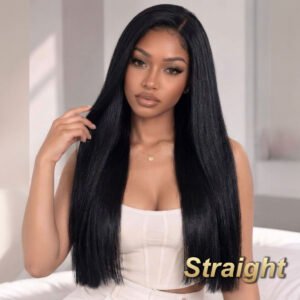
- Straight hair: 180% creates a balanced, sleek look, while 250% can produce a thicker, more dramatic silhouette.
- Body wave: 180% offers soft, flowing volume, while 250% creates a fuller, more glamorous wave pattern.
- Loose wave: 180% provides a versatile, relaxed finish, while 250% delivers more body throughout the style.
- Deep wave and water wave: Both densities can work beautifully, but 250% can create a particularly full, statement-making appearance.
- Kinky curly and Afro kinky textures: Higher density may create a more expansive silhouette, although curl definition, shrinkage, and styling technique also influence the result.
- Kinky straight: 180% is suited to a fuller natural-textured appearance, while 250% can provide a more substantial overall shape.
These are general styling expectations rather than guarantees. Actual fullness varies with curl pattern, hair length, layering, and wig construction.
4. Check the Hair Quality, Not Just the Density
Density is only one part of a wig’s quality. A wig with a high density label may still disappoint if the hair looks thin toward the ends or the construction does not support the desired style.
Look for 100% human hair, clear information about cap construction, and product photos that show the hair from multiple angles.
Double-drawn human hair is worth considering if you prefer a more consistent thickness through the lengths and ends. Compared with hair that gradually becomes thinner toward the tips, double-drawn hair is intended to provide a fuller-looking finish.
At Velarisse Hair, the ReadyFit™ wig collection combines double-drawn human hair with glueless construction and pre-processed HD lace, allowing you to compare 180% and 250% density options within the same product range.
5. Think About Your Daily Routine
If you wear your wig frequently, your maintenance preferences matter.
A 180% density wig is generally a practical option if you want to keep daily styling relatively simple. A 250% density wig can be equally rewarding for everyday wear, but its greater volume may require more time for detangling and drying.
Whichever density you choose, use a suitable detangling brush or wide-tooth comb for your texture, handle the hair gently, and avoid excessive heat.
The Best Velarisse Hair Wigs for 180% and 250% Density
Velarisse Hair offers two relevant ReadyFit™ styles: a 13×4 HD lace front wig and a 5×5 HD lace closure wig. Both are available in 180% and 250% density options, so you can choose your preferred fullness without giving up the lace design that suits your routine.
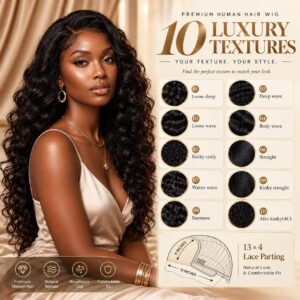
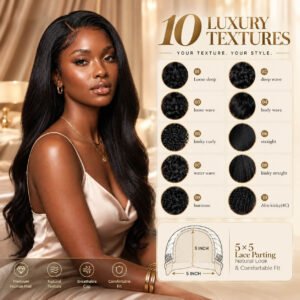
Both styles feature 100% human hair, double-drawn construction, natural black (1B) color, pre-cut HD lace, a pre-plucked hairline, pre-bleached knots, and glueless construction. Available textures include straight, body wave, loose wave, deep wave, water wave, kinky straight, kinky curly, and other textured options.
1. Velarisse ReadyFit™ 13×4 HD Lace Front Wig
Best for: Shoppers who want versatile parting options and a full, customizable hairstyle.
The 13×4 HD lace front wig is a great option if you want more lace coverage across the front hairline and greater flexibility when creating different parts.
With 180% density, this style is well suited to everyday straight hair, soft waves, and versatile looks that transition easily from casual outings to more polished occasions.
Choose 250% density if you want a thicker hairstyle, particularly for long, full-bodied straight hair or glamorous waves. The extra fullness can help create a more dramatic finish while the 13×4 lace design provides generous frontal styling space.
Velarisse Hair’s pre-cut lace, pre-plucked hairline, pre-bleached knots, and glueless construction also reduce the preparation typically associated with traditional lace wigs.
Explore the Velarisse ReadyFit™ 13×4 HD Lace Front Wig and select 180% or 250% density to match your preferred look.
2. Velarisse ReadyFit™ 5×5 HD Lace Closure Wig
Best for: Shoppers who prefer a defined parting area and a straightforward wearing routine.
The 5×5 HD lace closure wig is an appealing option if you don’t need the wider frontal lace coverage of a 13×4 wig.
Its 5×5 lace area provides a defined parting space, making it suitable for polished middle-part styles and other looks created within the available lace area.
At 180% density, the 5×5 wig offers a balanced, full appearance that works well for daily wear. It’s a practical option if you prioritize a natural-looking style and a simpler lace routine.
At 250% density, the same closure design delivers a much fuller hairstyle. This combination is especially worth considering if you want abundant body and thicker-looking ends while keeping the lace area more limited than a frontal wig.
Both density options feature Velarisse Hair’s double-drawn human hair and ready-to-wear details, making it easier to choose based on your preferred volume rather than starting with complicated installation work.
Explore the Velarisse ReadyFit™ 5×5 HD Lace Closure Wig and choose your preferred density and texture.
Which Velarisse Hair Combination Should You Choose?
| Your Priority | Recommended Option | Why It Fits |
|---|---|---|
| Everyday wear and balanced fullness | 13×4 or 5×5, 180% density | Fullness with versatile styling potential |
| Sleek, polished straight hair | 13×4, 180% density | Generous frontal lace and balanced volume |
| Long, dramatically full hair | 13×4, 250% density | Combines greater fullness with wider frontal lace coverage |
| Simple parting and a full everyday style | 5×5, 180% density | Defined parting area with a manageable volume level |
| Extra-thick hair with a defined part | 5×5, 250% density | High-volume appearance with a more limited lace area |
| Glamorous waves or curls | Either lace design, 250% density | Extra hair volume for a fuller silhouette |
These recommendations are starting points, not strict rules. You can choose either density for everyday wear or special occasions depending on your personal style.
Frequently Asked Questions
Is 250% density thicker than 180% density?
Yes. In general, a 250% density wig is designed to provide more hair and a fuller appearance than a 180% density wig. However, density percentages are not universally standardized, so the actual difference depends on the manufacturer and the wig’s construction.
Is 180% density enough for a full-looking wig?
Yes. A well-made 180% density wig can look full, especially when it uses quality hair with consistent thickness through the ends. For many shoppers, this density provides a satisfying balance between volume and natural movement.
Does 250% density look more natural than 180% density?
Not necessarily. Both densities can create beautiful, natural-looking hairstyles when matched to the desired look. A 180% wig may be better suited to someone who prefers moderate volume, while 250% may be ideal for someone whose natural style is exceptionally thick and full.
Is a 250% density wig heavier?
It can be. Because a 250% density wig generally contains more hair, it may weigh more than a comparable 180% wig. The difference depends on hair length, texture, cap construction, and how much hair is used.
Which density is better for long straight wigs?
Both can work well. Choose 180% for a sleek, full style with balanced movement. Choose 250% if you want a thicker silhouette and more substantial fullness through the ends. Check the product’s actual photos to see how the density looks at your selected length.
Which density is better for curly wigs?
Both densities can look beautiful with curls. A 180% density curly wig can provide defined texture and balanced volume, while 250% can create a larger, fuller silhouette. Consider the curl pattern as well as density because tighter curls can change the overall shape and apparent volume.
Does a higher-density wig require more maintenance?
Generally, yes. A wig with more hair can take longer to detangle, wash, and dry. Gentle handling, appropriate conditioning, and thoroughly drying the hair are important for maintaining both 180% and 250% density wigs.
Can I choose 180% or 250% density with Velarisse Hair?
Yes. The Velarisse ReadyFit™ 13×4 HD Lace Front Wig and 5×5 HD Lace Closure Wig offer both 180% and 250% density options. You can also choose from multiple textures and lengths to find a combination that suits your preferred style.
Final Verdict: 180% or 250% Wig Density?
The best density is the one that delivers the look you love without making your styling routine more complicated than you’d like.
Choose 180% density if you want balanced fullness, natural movement, and a versatile wig for everyday wear. Choose 250% density if you prefer extra-thick hair, dramatic volume, and a more substantial silhouette through the lengths and ends.
If you’re still deciding, start by choosing your preferred lace design and texture, then compare the two density options. With Velarisse Hair’s ReadyFit™ 13×4 and 5×5 glueless human hair wigs, you can prioritize the coverage and styling flexibility you want while selecting the fullness that best fits your personal style.
Your ideal wig isn’t necessarily the one with the highest density. It’s the one that makes you feel confident, looks the way you envisioned, and fits naturally into your life.